

Skip to content
Many architectural projects are decided in the very first decisions

Geographical decision support for architects

Many architectural projects are decided in the very first decisions
Many architectural projects are decided in the very first decisions. The framework for design, feasibility and finances is set as early as the program and sketch stage. In order to make informed decisions, a clear understanding of the site's conditions is required - before form and volumes are locked.
With geographic decision-making data, architects have a better factual basis early in the process and better conditions for dialog with clients, planners and other stakeholders.

Understanding the site at an early stage

A site is never empty. Even when the land appears undeveloped, there are already structures that influence a project: the slope of the terrain, property boundaries, planning conditions, movement patterns and relationships with the surroundings.

In the early stages, architects need to be able to read the site quickly to identify both opportunities and constraints. When decisions are made on a fragmented or uncertain basis, the risk of retakes later in the process increases.

Geographical data and analysis allow for a more comprehensive view of the site - and thus better decisions from the start.

iStock-1336429743-ai-modified-12e7bde4-a8db-4238-9bd9-fe2c20b815e7

What is a geographical decision aid?

A spatial evidence base combines several types of data to provide an overall picture of the site conditions. It can include, among others:

Elevation data and terrain

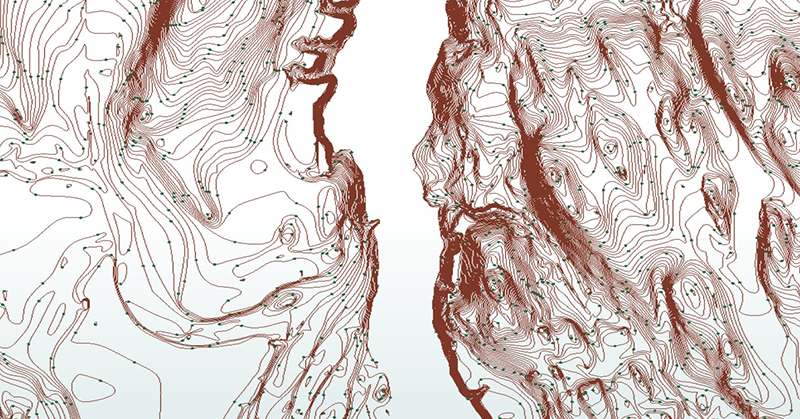
Topography influences everything from volume placement and accessibility to sightlines and the relationship between building and landscape. Elevation data makes it possible to understand slopes, level differences and the structure of the terrain at an early stage - an important support in sketch and volume studies.

Property information and planning conditions

Property boundaries, ownership, rights and planning information set the legal framework for a project. With access to up-to-date and reliable property information, architects can identify conditions early on that might otherwise be discovered late in the process.

Geographical analysis and visualization

Combining different data layers - such as elevation data, property boundaries, orthophotos and surrounding structure - makes it possible to analyze the context of the site and visualize the consequences of different choices. This creates a common basis for analysis, dialogue and decision-making.

What is a geographical decision aid?

A spatial evidence base combines several types of data to provide an overall picture of the site conditions. It can include, among others:

Elevation data and terrain

Topography influences everything from volume placement and accessibility to sightlines and the relationship between building and landscape. Elevation data makes it possible to understand slopes, level differences and the structure of the terrain at an early stage - an important support in sketch and volume studies.

Property information and planning conditions

Property boundaries, ownership, rights and planning information set the legal framework for a project. With access to up-to-date and reliable property information, architects can identify conditions early on that might otherwise be discovered late in the process.

Geographical analysis and visualization

Combining different data layers - such as elevation data, property boundaries, orthophotos and surrounding structure - makes it possible to analyze the context of the site and visualize the consequences of different choices. This creates a common basis for analysis, dialogue and decision-making.

When is geographical evidence used in the architectural process?

Geographical decision support is mainly used in the early phases of a project, for example

  • program and sketch work
  • volume studies and site analyses
  • dialog with clients and planners
  • early feasibility studies and concept development

Working with the right evidence from the start reduces the risk of late adjustments and rework - and makes it easier to develop solutions that are both well thought out and feasible.

Saldo-1

A support for the architect's work - not a replacement

Geographical decision support does not replace the architect's design competence - it strengthens it.
A better understanding of site conditions at an early stage reduces uncertainty in decision-making and gives the architect a better chance of focusing on quality, completeness and sustainable design.

Ultimately, it's about the same thing as always in architecture: understanding the site before changing it.

Want to know more?

Metria helps architects with geographical decision support in early stages - from property information and elevation data to analysis and visualizations adapted to the needs of the project.

Contact us for a dialog about which decision support is relevant in your project.

Topography - how elevation information can strengthen the architect's decision-making

In the early stages of a project, many of the decisions that will later be difficult to change are shaped. Volumes are placed, entrances are oriented and the relationship to the surroundings is established. At the same time, it is often precisely at these stages that the data is most transparent.

The topography is one of the most fundamental characteristics of the site. It affects how the building meets the ground, how movements are organized and how the project is perceived in its context. Understanding the shape of the terrain early on is therefore not a technical detail - it is part of the architectural process.
Metria e-handel Höjdkurvor 2 webb

Read more here

Early decisions shape the architecture - why geographic and real estate information is crucial

iStock-1470830325

Read more here

Many of the most crucial decisions in an architecture project are made early on. Already in the program and sketch stage, the framework for design, feasibility and economy is set. At the same time, these decisions are often based on limited or fragmented information about the actual conditions of the site.

Geographical and real estate information allows architects to work more knowledge-based from the start - and reduce the risk of retakes later in the process.

Maps and orthophotos are used by architects today to understand the context of the site: building structure, infrastructure, topography and the relationship to surrounding environments. They form an important basis for analysis, sketch work and dialog with clients.

Curious to know more?

Do you want to know which data is relevant for your project?
Contact us for a dialog about site analysis in early stages.
TOUCH
Jonathan Rydman Inside sales

E-mail: jonathan.rydman@metria.se

Telephone: 010-121 8004

Jonathan Rydman Inside sales